Online booking is currently closed.
Please call us at (218) 365-4885 to book.
Boat Rental for Beginners: Start on the Lake
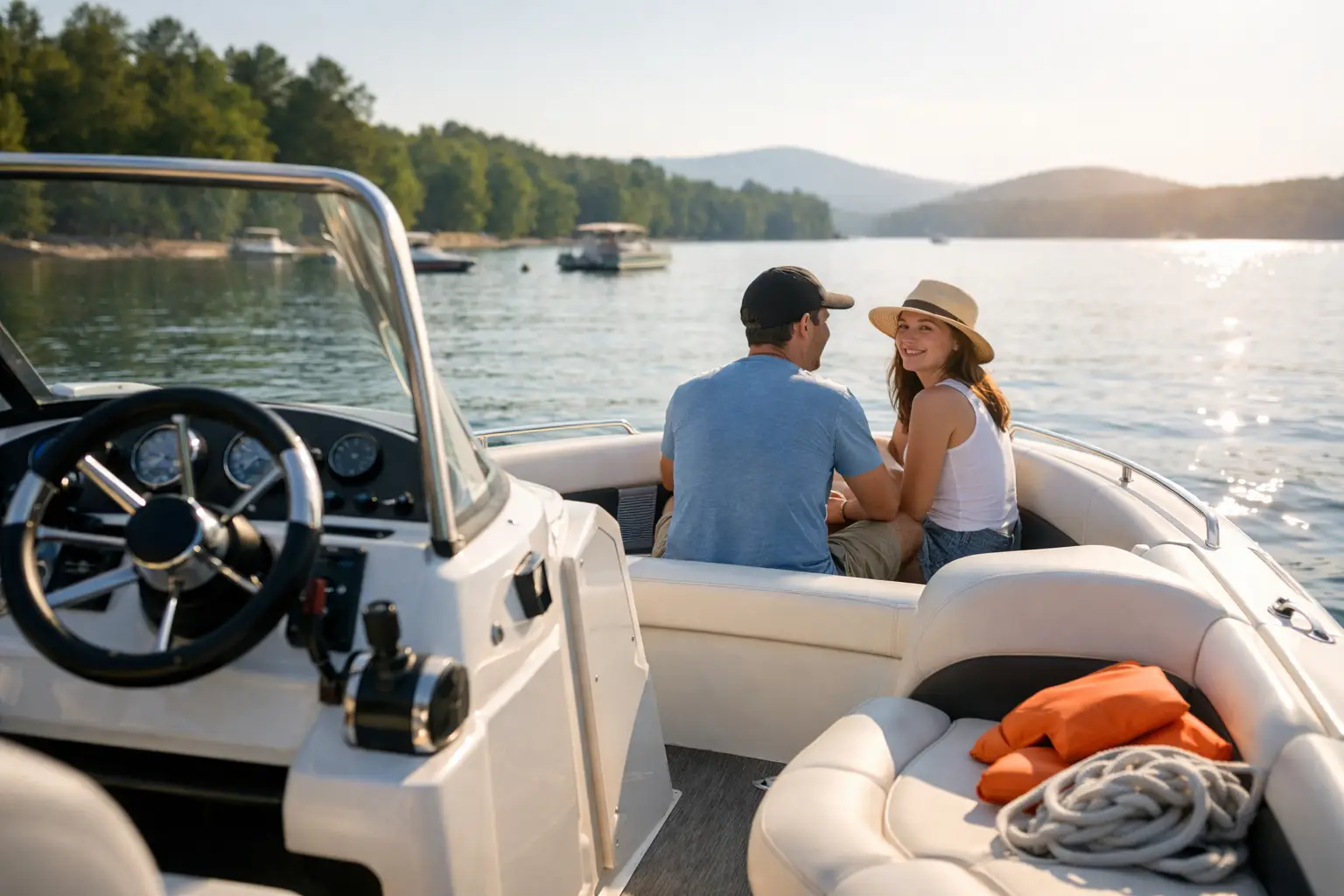
The first time you take the wheel, the lake can feel bigger than it looked from the beach. That feeling is part of the fun. With the right boat, a simple plan, and a little local guidance, boat rental for beginners can become one of the best parts of a Minnesota family vacation – whether your goal is finding a quiet fishing spot, pulling up to a swimming area, or simply taking in the White Iron Lake shoreline together.
You do not need to arrive as an experienced captain to enjoy a day on the water. You do need to choose a boat that fits your plans, respect changing Northwoods conditions, and give yourself permission to start slow. A relaxed first outing usually makes for the memories everyone talks about long after the cabin bags are unpacked.
Start With the Boat That Fits Your Day
For many first-time renters, a pontoon is the easiest place to start. Pontoons offer a wide, stable deck, comfortable seating, and enough room for a family, a cooler, fishing gear, and the extra layers that can come in handy on a northern Minnesota lake. Their steady ride makes them especially appealing for young kids, grandparents, and anyone who would rather spend the day relaxing than balancing.
A fishing boat can be the better choice when fishing is the main event. It is generally more maneuverable and may get you to a favorite shoreline, weed edge, or mid-lake structure with more precision. The trade-off is that a fishing boat has less open space and can feel more active when the wind picks up. For a couple of anglers or a small group focused on walleye, crappie, bass, or northern pike, that may be exactly what you want.
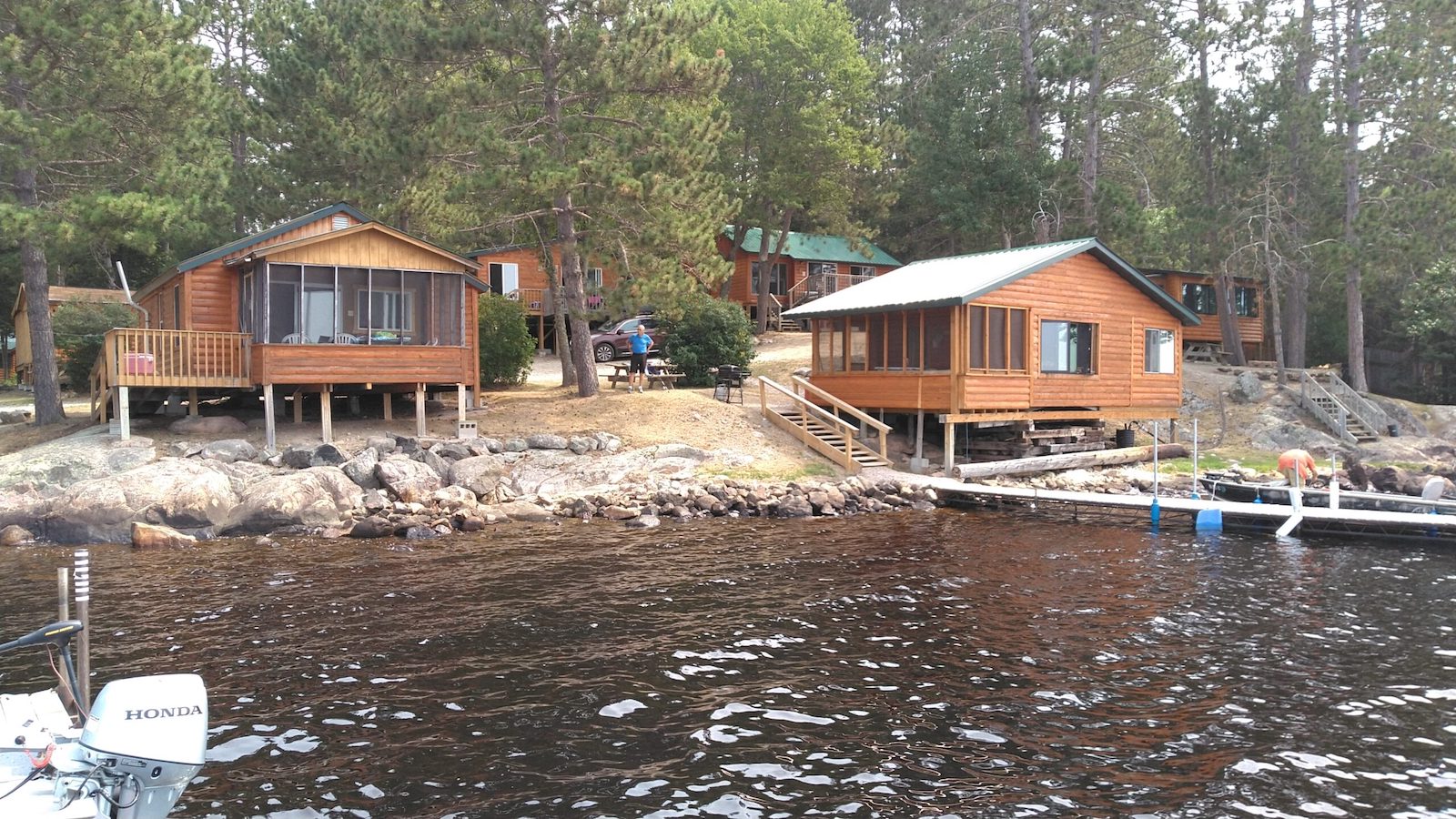
Canoes, kayaks, and paddle boats create a quieter kind of lake day. They are wonderful for exploring close to shore on calm water, watching loons, and giving kids a chance to paddle. They are not the right choice for covering long distances, crossing open water in wind, or hauling a full day’s worth of fishing equipment. At White Iron Beach Resort, guests can enjoy complimentary canoes, kayaks, and paddle boats, while larger outings can be planned with a boat, motor, or pontoon rental.
Before reserving, think less about what looks exciting and more about what your group will actually do. How many people are aboard? Will children be moving around? Are you packing lunch? Do you want to fish, swim, sightsee, or do a little of everything? The best rental is the one that leaves everyone comfortable and gives the driver room to focus.
Boat Rental for Beginners: Get Comfortable at the Dock
Your orientation is not a formality. It is the part of the day that helps turn nervous first-timers into confident boaters. Ask the rental team to show you how to start and stop the motor, shift into forward and reverse, raise or lower the motor if needed, use the steering wheel, and read the fuel gauge. Have them point out where life jackets, the anchor, paddles, and safety equipment are stored.
Do not be shy about asking for a slow demonstration of docking. Docking is usually the skill beginners worry about most, largely because it happens near people, boats, and solid objects. The good news is that it does not require speed. In fact, slow is the whole point. Use brief, gentle movements, allow for wind, and approach the dock at an angle when directed. If your first attempt is not picture-perfect, circle around and try again. Experienced boaters do the same.
It also helps to agree on a few simple jobs before leaving shore. One adult should operate the boat. Another can help with lines and docking, while children should know where to sit while the boat is moving. Clear roles keep the departure calm and prevent everyone from reaching for the same rope at once.
Make Safety Part of the Vacation, Not a Chore
A safe lake day still feels like a vacation. The goal is not to fill the morning with rules. It is to set up a few habits that let everyone relax once the boat is underway.
Every person should have a properly fitting life jacket available, and children should wear theirs whenever they are on or near the water. Make sure the jackets fit before departure, rather than trying to adjust straps after a child has become impatient to go swimming. Even strong swimmers should treat a life jacket as standard lake equipment, especially when the boat is moving or conditions are unpredictable.
Check the weather before you leave and look again during the day. Northern Minnesota can deliver a warm, sunny morning followed by wind, rain, or a fast-moving thunderstorm. If dark clouds build, the wind strengthens, or you hear thunder, head back toward shore early. There is no fish, swimming spot, or sunset view worth racing a storm for.
Keep a close eye on your speed near shore, docks, swimmers, and other boats. Give paddlecraft plenty of room, reduce your wake where appropriate, and remember that a boat takes time to stop. Alcohol and boat operation are also a poor mix. Choose a sober driver who can stay alert to weather, traffic, navigation, and the people aboard.
Plan a Short First Route
Your first boat outing does not need to be an all-day expedition across unfamiliar water. A shorter route gives you time to practice handling the boat, settle into the rhythm of the lake, and return before anyone is tired, hungry, or chilly.
Start by cruising in an open area away from docks and shoreline obstacles. Get a feel for steering, turning, and how the boat responds when you ease off the throttle. Then choose one simple destination: a nearby fishing area, a calm bay for a snack, or a stretch of shoreline where the family can look for eagles and loons.
Tell someone ashore where you expect to go and when you plan to return. Bring your phone in a waterproof case, but do not rely on it as your only source of information. Keep the lake map or route guidance provided during your orientation close at hand. On a new lake, it is smart to avoid unfamiliar shallow areas until you understand the marked channels and local conditions.
For families, leave extra room in the schedule. Kids often remember the snack break, the chance to trail a hand in the water, or the moment a fish splashes beside the boat more than the number of places you visited. A lake day feels better when there is no pressure to rush.
Pack for Comfort, Not Just the Plan
A cooler, drinking water, sunscreen, hats, and sunglasses are the basics, but northern Minnesota boating calls for a few more practical items. Bring a light jacket or fleece even on a warm day. The breeze on open water can be surprisingly cool, particularly in the morning and evening. Towels are useful for swimming, wet feet, and the occasional splash over the side.
If you are fishing, keep your gear simple for the first trip. A few rods, a small tackle box, and a plan for the species you hope to catch are easier to manage than a crowded deck full of equipment. Ask for local suggestions on current fishing conditions, productive areas, and what bait is working. That local knowledge can save time and help beginners spend more of the day enjoying the water.
Bring a bag for trash and make sure nothing loose can blow overboard. A clean boat and clean shoreline are part of caring for the lake that makes these vacations possible.
What to Do When Conditions Change
Even a well-planned outing can shift. The wind may pick up, a child may decide they are done fishing, or the fish may not cooperate. That does not mean the day has gone wrong. It simply means it is time to adjust the plan.
If waves build and your group feels uncomfortable, slow down and return by the most direct safe route. Keep passengers seated and distribute weight evenly. If the fishing is quiet, turn the ride into a sightseeing cruise or head back for a beach afternoon, a game, or time around the cabin. One of the pleasures of a resort stay is having more than one good option.
A first rental is also a chance to learn what kind of lake day your family enjoys. Some groups discover they want a roomy pontoon and a picnic. Others find that an early-morning fishing boat outing suits them perfectly. There is no single right way to spend time on White Iron Lake.
The best first day on the water is rarely the one with the longest route or the fullest schedule. It is the day everyone comes back smiling, a little windblown, and ready to tell the story of the fish that almost got away.