Online booking is currently closed.
Please call us at (218) 365-4885 to book.
How to Choose Cabin Bedrooms for Your Group
A great day on the lake starts with a good night’s sleep. When you are figuring out how to choose cabin bedrooms, it is tempting to look only at the total number of beds. But the better question is whether each person in your group will have a comfortable place to rest, get ready, and recharge between fishing mornings, beach afternoons, and campfire nights.
The right bedroom setup can make a Northwoods trip feel easy from the moment everyone arrives. It gives parents a little breathing room, helps kids settle down after a full day of swimming, and lets anglers get an early start without waking the whole cabin. Before booking, think about the people in your group, how they travel, and what kind of vacation you want to have together.
Start With Who Is Sleeping Where
Begin with the actual makeup of your group, not just the headcount. A cabin that sleeps eight can feel very different for four couples than it does for grandparents, two parents, and four children. Look at ages, relationships, bed-sharing preferences, and bedtime routines before deciding how many bedrooms you need.
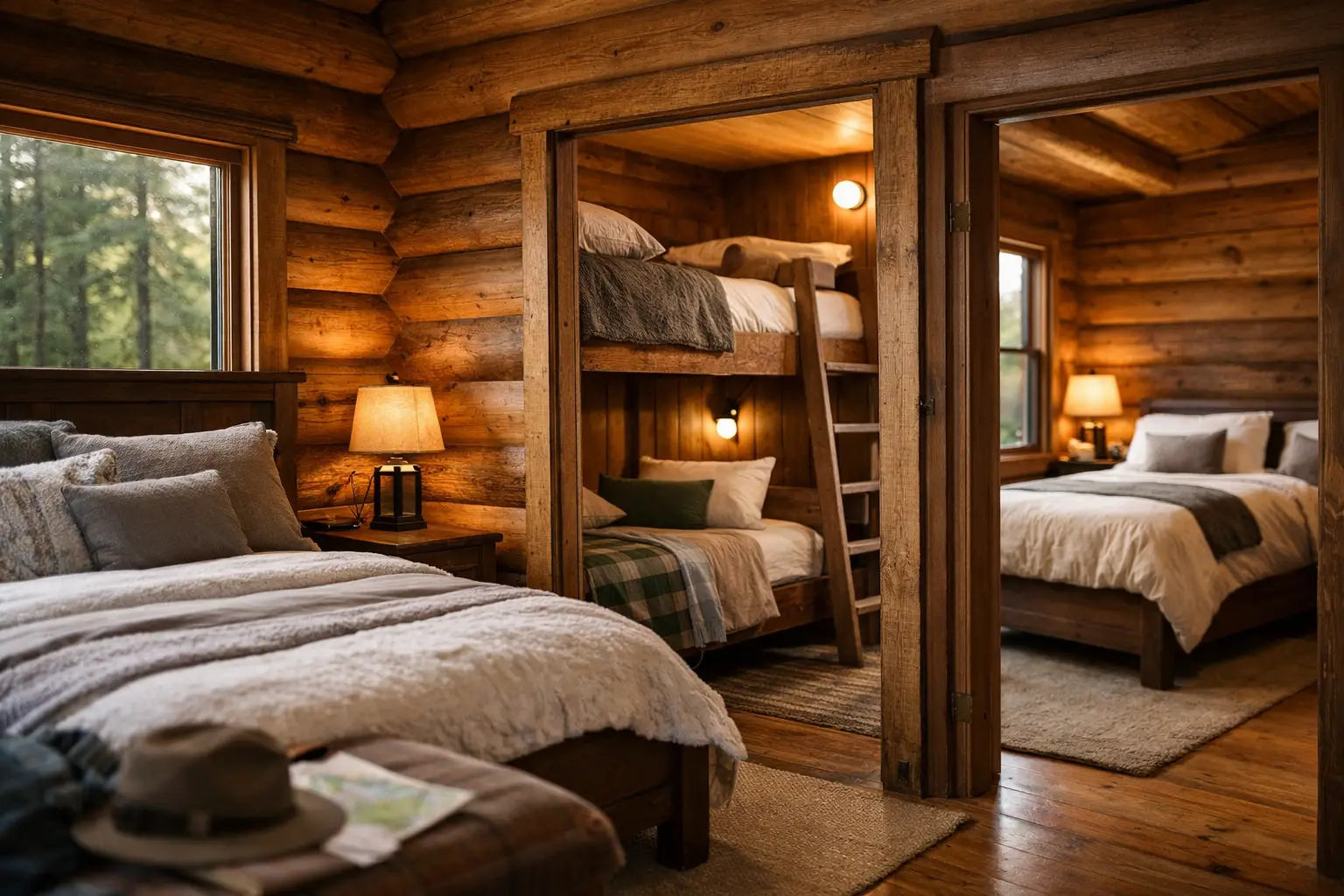
Couples generally appreciate a private bedroom with a larger bed, especially on a longer stay. Families with younger children may prefer a bedroom close to the parents’ room, while teens often enjoy their own space or a room with multiple beds where they can stay up talking without disturbing everyone else. Grandparents may be most comfortable in a main-floor bedroom, particularly if stairs are a concern.
It helps to assign sleeping spaces before you book. You do not need a complicated chart, but a quick conversation prevents the awkward arrival-day question: “Who gets the only private room?” When everyone knows the plan, settling into vacation mode is much simpler.
Count Bedrooms, Not Just Beds
A sleeping capacity number is useful, but it does not tell the whole story. Sofas, futons, and open lofts can be handy for kids or flexible groups, yet they do not provide the same privacy as a separate bedroom with a door.
For a family vacation, a cabin with two bedrooms may be a better fit than a larger open-concept cabin with the same number of beds. Parents can enjoy a little quiet after the kids are asleep, and early risers have a place to make coffee or organize fishing gear without tiptoeing around sleeping bags in the living room.
For a group fishing trip, an open sleeping area may work well if everyone is focused on early mornings and long days on the water. Friends who have traveled together for years may care more about boat access, fish-cleaning facilities, and enough beds than private rooms. The best setup depends on the group’s expectations, not a one-size-fits-all formula.
Think About Doors, Layouts, and Noise
Ask where the bedrooms sit within the cabin. A room directly off the living area can be convenient for parents keeping an ear on young children, but it may also be noisier when someone is making breakfast before sunrise. A bedroom tucked away at the opposite end of the cabin can offer welcome privacy for grandparents or couples.
Doors matter, too. A closed bedroom door gives guests a quiet retreat for naps, early bedtimes, or a few peaceful minutes with a book after a busy day outdoors. If a cabin has a loft or sleeping nook instead of a fully enclosed room, consider who will be most comfortable there.
Match Bed Sizes to Your Guests
Bed size has a real effect on how rested everyone feels. A queen or king is usually the natural choice for couples, while twin beds and bunk beds are often a great match for children and teens. Full beds can work for one adult or two kids, but they may feel snug for two adults over several nights.
Do not assume every adult will be happy sharing a bed. On multigenerational trips, siblings may be perfectly content in twin beds, while adult children, friends, or relatives may prefer their own sleeping surface. A little extra room can be especially valuable after a long drive to Ely or a full day paddling, hiking, and exploring the lake.
If you are booking for a mixed-age group, look for a balanced layout: private rooms for couples, accessible sleeping options for older guests, and flexible beds for kids. That arrangement gives everyone a place that feels made for them.
Plan for Your Vacation Rhythm
Your cabin bedroom choice should support the way you plan to spend your days. An early-morning fishing group has different needs than a family building a relaxed week around the beach, paddle boats, and afternoon ice cream in town.
Anglers often benefit from a setup where the people leaving before dawn can move around without waking late sleepers. A bedroom near an exterior door can be useful for those heading out to the dock, while a separate sleeping area allows everyone else to rest. If someone in the group likes to nap after an early fishing run, a quiet bedroom away from the main living space becomes even more valuable.
Families may prioritize proximity instead. Parents of small children often sleep better when their room is close by, especially in an unfamiliar place. Older kids may enjoy a bunk room or separate bedroom that gives them a little independence while keeping the family together under one roof.
For a reunion or multigenerational getaway, choose a layout that offers both connection and retreat. Shared meals, card games, and stories around the fire are often the best parts of the trip, but even the closest family appreciates a private place to recharge.
Do Not Forget Bathrooms and Getting-Ready Space
Bedroom planning and bathroom planning go hand in hand. A cabin with plenty of beds but one small bathroom can create a morning traffic jam, especially when everyone is trying to get dressed for a boat ride, breakfast, or a day in town.
Consider how many people will be getting ready at the same time. Families with young children may value a bathroom near their bedroom. Groups of adults may prefer multiple bathrooms or a layout that separates the sleeping areas enough to make mornings feel less crowded.
Also think beyond the bathroom. Is there room for suitcases, fishing tackle, cool-weather layers, and the pile of towels that comes with a lakeside vacation? Bedrooms do not need to be oversized, but having a dresser, closet, hooks, or floor space can make a cabin feel organized rather than cramped.
Choose Comfort That Fits the Season
Northern Minnesota evenings can be cool, even after a warm summer day on White Iron Lake. A comfortable bedroom means more than a bed count. Look for a cabin that gives your group the space to settle in, put on an extra layer, and sleep well after a day outdoors.
In warmer weather, guests may appreciate bedrooms with good airflow and enough room to spread out. During spring and fall stays, cozy bedding and a warm, comfortable cabin become part of the experience. If you are traveling with children, pack familiar sleep items when possible. A favorite blanket, night-light, or bedtime book can make a new room feel comfortable right away.
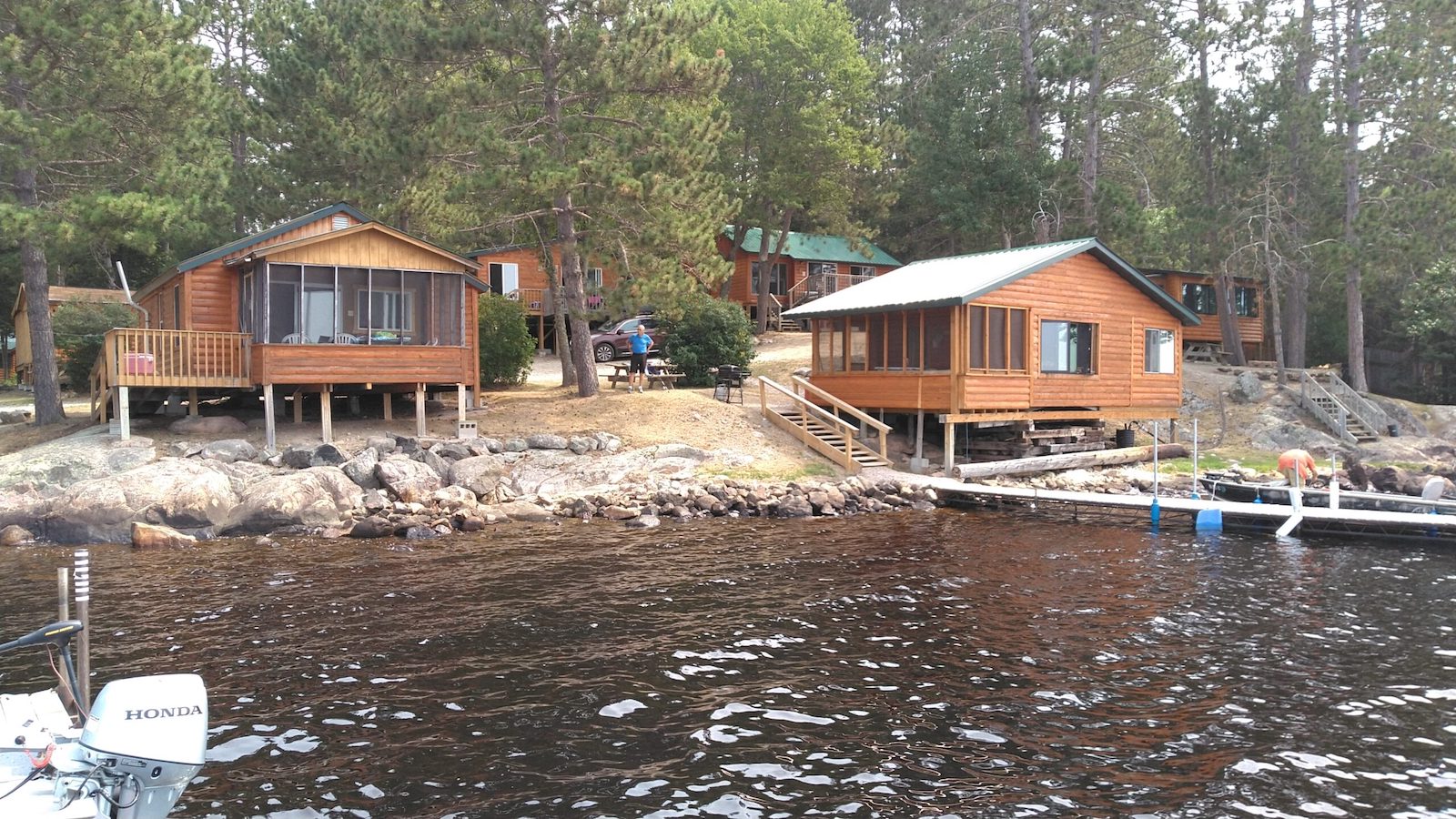
At White Iron Beach Resort, cabin and duplex options range from classic remodeled stays to larger luxury lodging for groups, so it is easier to match your sleeping arrangement to the kind of getaway you have in mind.
A Simple Way to Choose Cabin Bedrooms
Before reserving your cabin, talk through four practical questions: Who needs a private room? Who is comfortable sharing a room or bed? Does anyone need a main-floor sleeping option? And will early risers and late sleepers need separation?
Once you have those answers, compare the bedroom layout with your group’s real routine. A slightly larger cabin may be worth it when it gives parents privacy, makes room for grandparents, or lets the kids have a space of their own. On the other hand, a cozier cabin can be exactly right for a small family that wants to spend most of its time fishing, relaxing, or playing in the lake.
The best cabin bedroom arrangement is the one that lets your group wake up rested and ready for another unforgettable day in the Northwoods.