Online booking is currently closed.
Please call us at (218) 365-4885 to book.
How to Launch Rental Boats Safely on the Lake
A great lake day often begins at the dock: cool morning air, fishing rods tucked into the boat, kids ready to spot loons, and a whole stretch of water ahead. Knowing how to launch rental boats safely helps everyone get to the fun faster, whether you are heading out for walleye, a family cruise, or a quiet paddle along the shoreline.
Launching a rental boat is not difficult, but it does deserve a few unhurried minutes. The goal is simple: protect your passengers, the equipment, and the lake while building confidence before you leave the dock. A little preparation also makes the return far more relaxed when the day winds down.
Start With the Boat Orientation
Before starting the motor or stepping away from shore, take the rental orientation seriously. This is the best time to ask questions, especially if you are unfamiliar with the type of boat you reserved. A fishing boat, pontoon, canoe, and kayak each handle differently, and lake conditions can change quickly.
Ask the resort team to point out the life jackets, fire extinguisher if applicable, navigation lights, fuel information, anchor, dock lines, and any required safety equipment. Make sure you know how to start and stop the motor, shift into forward and reverse, raise or lower the motor when needed, and use the bilge pump if the boat has one.
For a pontoon rental, ask about the best docking speed and how wind affects the wide, flat profile of the boat. For a fishing boat, confirm where to stow rods, tackle, and coolers so they do not shift while underway. If you are launching a non-motorized boat, find out which shoreline area is best for easy entry and exit.
There is no prize for pretending you already know the answer. Resort staff want you to have a safe, enjoyable outing, so take advantage of local knowledge about White Iron Lake conditions, nearby fishing spots, and areas that may be busy with swimmers or other boats.
Complete a Quick Pre-Launch Check
A calm, organized check before departure prevents most small on-the-water problems. Gather your group near the dock, load heavier items low and centered in the boat, and keep the walking area clear. Do not overload a rental boat, even for a short trip across the lake. Capacity limits account for passenger weight, gear, and safe handling.
Before launching, confirm these basics:
- Every passenger has a properly fitted life jacket, with children wearing theirs before getting on the boat.
- The drain plug is in place if the boat requires one, and the boat is free of standing water.
- Gear, coolers, and fishing equipment are secure and not blocking controls or exits.
- Dock lines are ready to release, but one line remains attached until the operator is seated and prepared.
- The weather looks suitable for your plan, with wind, clouds, and changing temperatures considered.
Minnesota lake weather can shift from sunny and still to breezy in a surprisingly short time. If the wind is already building, choose a shorter route, stay close to protected shoreline, or postpone your outing. The lake will still be there after lunch.
How to Launch Rental Boats From a Dock
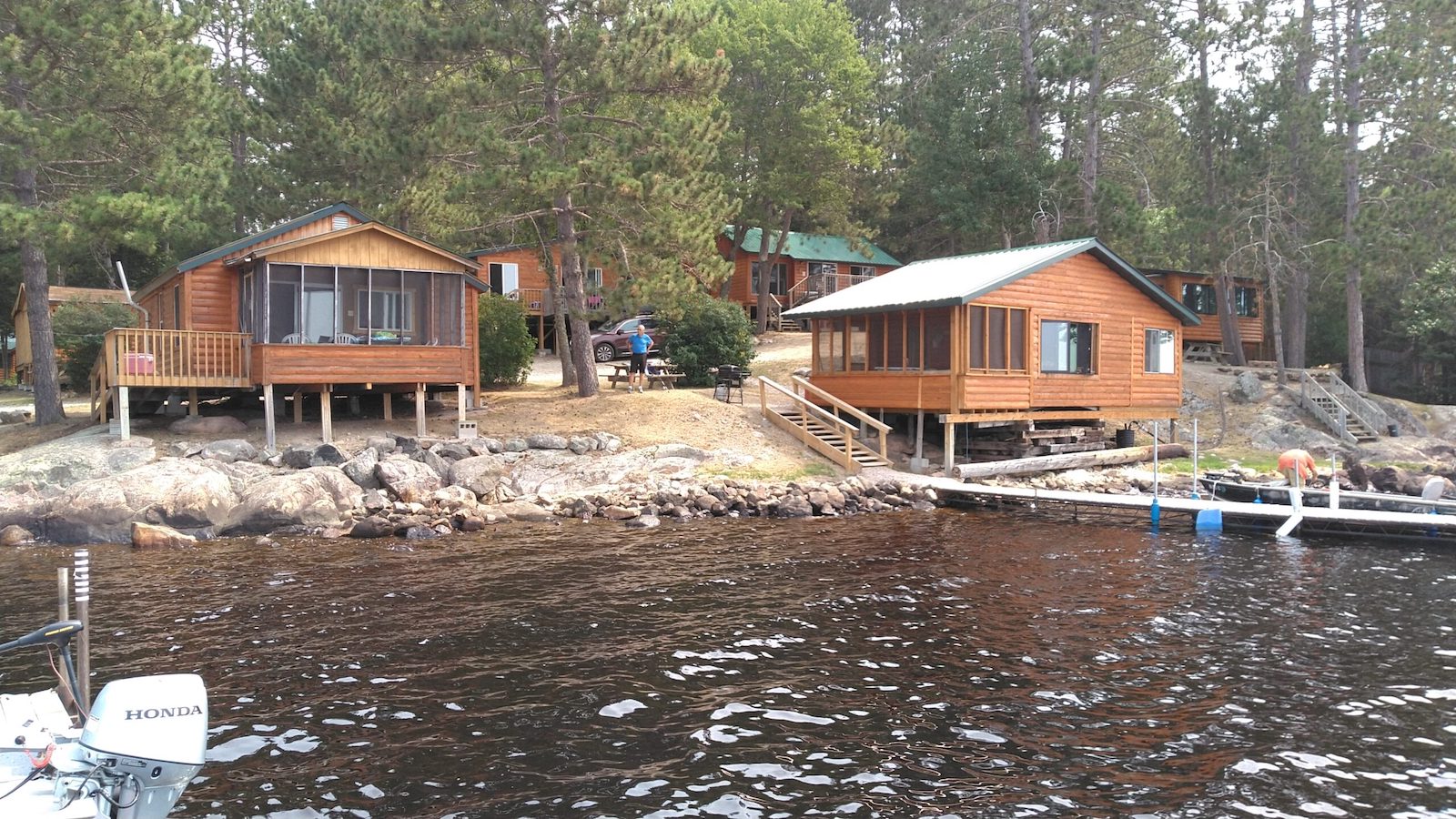
At many resorts, launching means departing from a dock rather than backing a trailer down a public ramp. The same fundamentals apply: move slowly, communicate clearly, and keep passengers seated until the boat is stable and underway.
Start by placing life jackets on children and anyone who is not a confident swimmer. Board one person at a time, stepping into the center of the boat instead of jumping from the dock. Keep weight balanced from side to side. In a pontoon, have passengers settle into seats before the operator starts moving. In a smaller fishing boat, avoid having everyone stand on one side while loading bags or adjusting gear.
Once the operator is seated at the controls, start the motor according to the instructions provided during orientation. Untie the final dock line only when you are ready to leave. Use a gentle push away from the dock if needed, shift smoothly into reverse or forward, and idle away at the slowest practical speed.
Do not turn sharply beside the dock. Prop wash and sudden movement can pull the boat back toward pilings, other vessels, or swimmers. Give yourself room, then straighten the boat before gradually increasing speed in an open, safe area.
If wind is pushing the boat into the dock, take your time. A second adult can hold a line while the operator gets positioned. It is much easier to reset and try again than to force a hurried departure.
Launching From a Boat Ramp
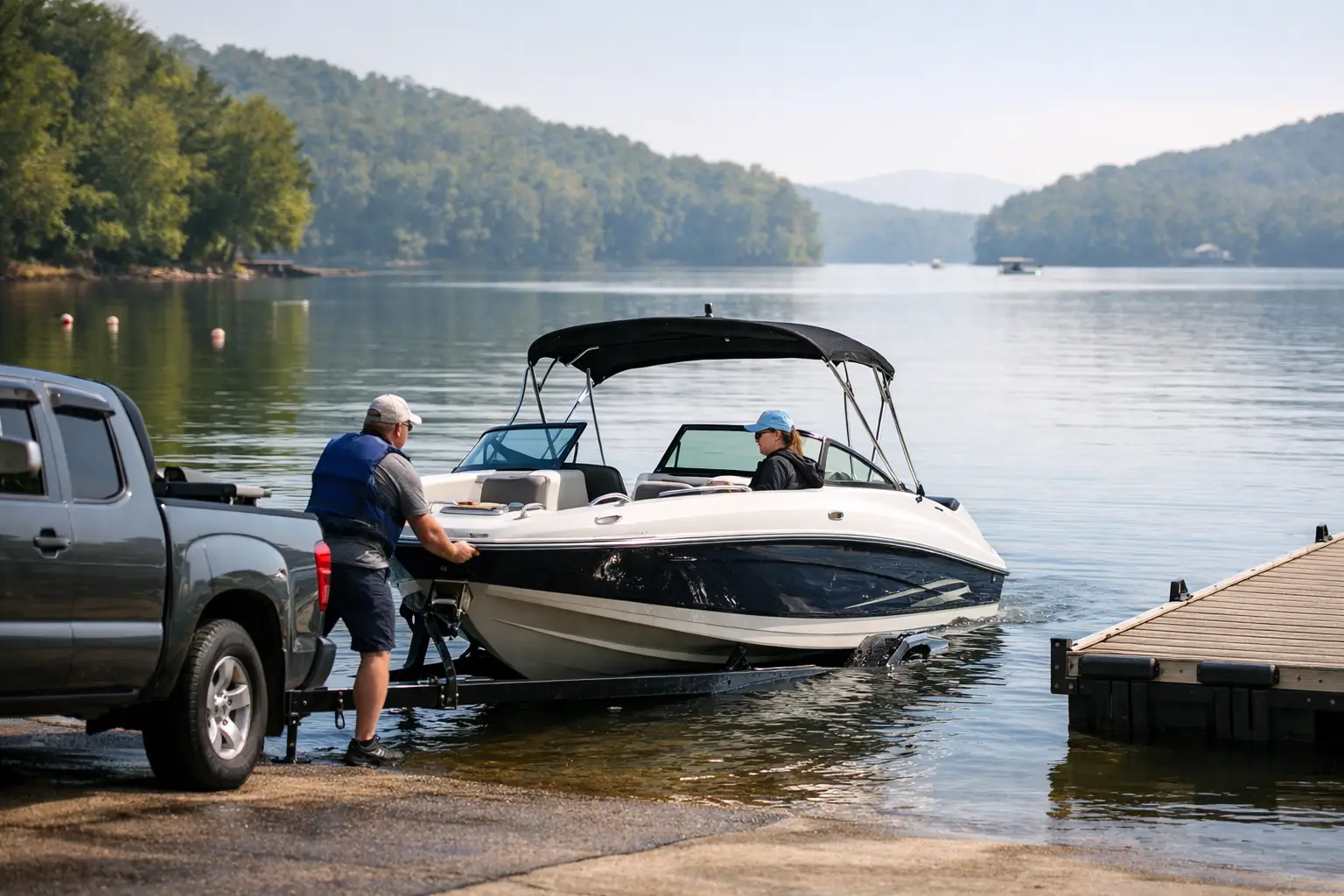
If your rental arrangement includes a trailer launch, ask for specific instructions before heading to the ramp. Some rentals are delivered to the water, while others may have a designated process for guest use. Follow the resort’s procedures and any posted ramp rules first.
At a public or shared ramp, prepare the boat away from the launch lane whenever possible. Load gear, remove tie-downs as instructed, put in the drain plug, and make sure the motor can be lowered before you back down. This keeps the ramp moving for everyone.
Back slowly and use a spotter if you are not comfortable with a trailer. Once the boat is floating, keep it controlled with a line rather than letting it drift across the launch area. The operator should stay with the boat while the driver parks the vehicle, unless the ramp setup and your group allow for another safe plan.
The main rule is patience. Busy summer ramps can feel rushed, but steady movements are safer than quick ones. Other boaters will appreciate a courteous launch, and your passengers will appreciate a calm start.
Choose a Smart First Route
Your first few minutes on the water are the time to get comfortable with steering, throttle response, and visibility. Stay at idle speed until you are well clear of docks, swimming areas, and other boats. Watch for rocks, buoys, paddlecraft, and floating debris, particularly near shore.
On a family outing, start with a short cruise rather than immediately crossing the widest part of the lake. Let everyone get settled, adjust seating, and make sure hats, sunglasses, and snacks are secure. On a fishing trip, make a plan for where nets, tackle boxes, and rods will go before you begin casting.
Keep an eye on the sky and on the water surface. Choppy waves are a sign to slow down. Smaller boats may be more comfortable when driven at an angle to waves rather than directly into them, but the right approach depends on the boat, wave height, and your experience. When conditions feel beyond your comfort level, turn toward protected water or head back to the dock.
Make the Return as Easy as the Launch
Many guests find docking more intimidating than leaving, especially when afternoon wind picks up. The secret is to approach slowly enough that you have time to correct. There is no need to impress anyone with speed at the dock.
As you near shore, ask passengers to remain seated and keep hands and feet inside the boat. Use fenders if provided, have a dock line ready, and approach at idle speed. Aim for a gentle, controlled arrival. If the angle is not right, back away slowly and try again. A second approach is normal, even for experienced boaters.
When returning a rental, follow the fuel, cleaning, and check-in instructions you received. Remove personal items, collect trash, and let staff know if you noticed a mechanical issue, encountered rough weather, or had any question about the boat. Sharing that information helps keep the next guest’s lake day safe, too.
Let the Lake Day Set the Pace
The best boat outings leave room for both adventure and common sense. At White Iron Beach Resort, a rental boat can be your ride to an early fishing hole, a sunny picnic spot, or an evening cruise with the family. But the most memorable days are rarely the ones spent rushing.
Take the orientation, wear the life jackets, give the dock plenty of space, and let the weather guide your plan. Once you are safely out on the water, there is nothing left to do but fish, relax, or play in the lake together.